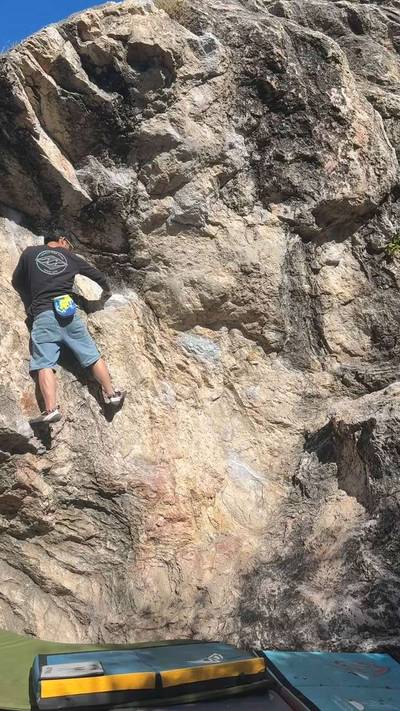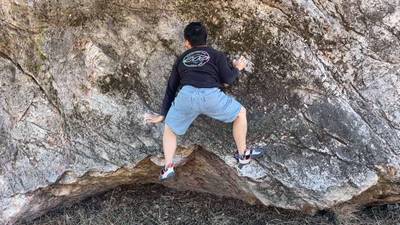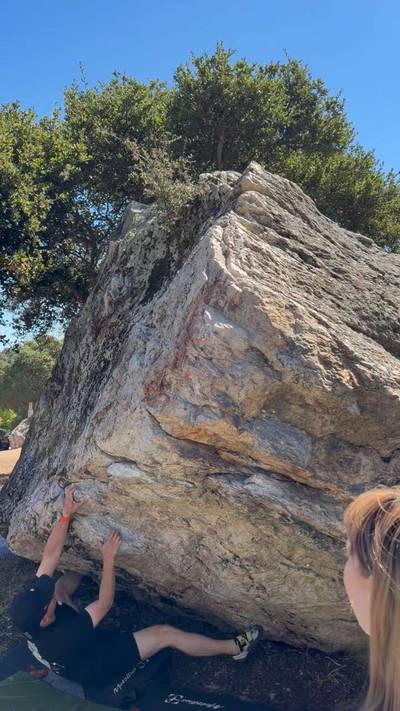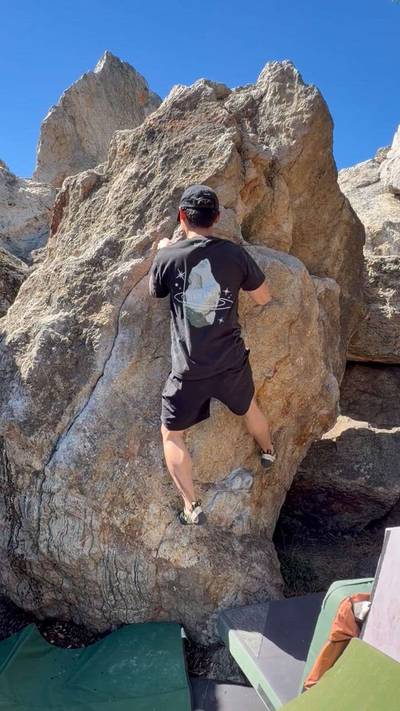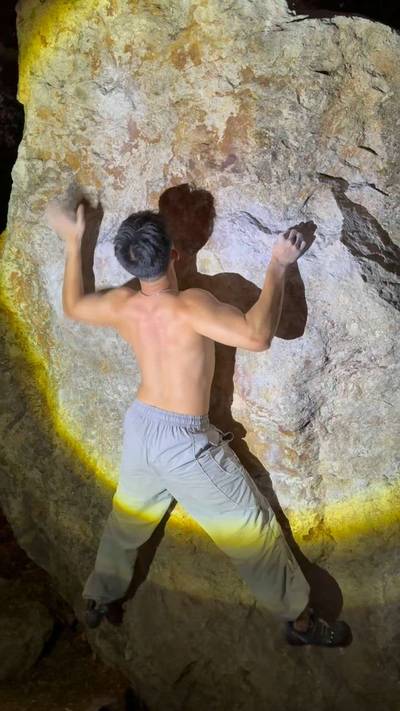
This digital Berkeley climbing guidebook gives you GPS navigation, verified topos, and beta for hundreds of climbs. Explore classics and hidden gems with offline access to maps, directions, and beta videos. Whether it's your first visit or fiftieth, KAYA makes your Berkeley days smoother, safer, and more dialed.
Overview: The boulders of Berkeley are the heart and soul of Bay Area climbing. Occasionally, in the history of American climbing, an area displays a unique charisma that reverberates across the country. This happened during the golden age of big wall climbing in Yosemite and again at Smith Rock with the development of sport climbing in the 1980s. These moments were only possible because Berkeley climbers, such as Dick Leonard, developed the dynamic belay at Indian Rock in the 1930s. Softer falls on a rope make it safer to push the boundary of what is possible.
The rock is nor... Show more
This digital Berkeley climbing guidebook gives you GPS navigation, verified topos, and beta for hundreds of climbs. Explore classics and hidden gems with offline access to maps, directions, and beta videos. Whether it's your first visit or fiftieth, KAYA makes your Berkeley days smoother, safer, and more dialed.
Overview: The boulders of Berkeley are the heart and soul of Bay Area climbing. Occasionally, in the history of American climbing, an area displays a unique charisma that reverberates across the country. This happened during the golden age of big wall climbing in Yosemite and again at Smith Rock with the development of sport climbing in the 1980s. These moments were only possible because Berkeley climbers, such as Dick Leonard, developed the dynamic belay at Indian Rock in the 1930s. Softer falls on a rope make it safer to push the boundary of what is possible.
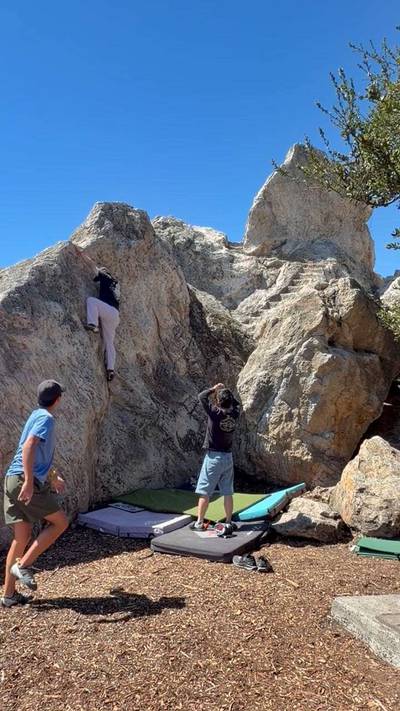
The rock is northbrae rhyolite which was thrown into the area by volcanic explosions about 10 million years ago. This explains why Berkeley is full of small, discrete clusters of boulders. These scattered areas were the “gym” before gyms existed. Over the decades, climbers have gotten creative with their options on limited real estate, leading to a long tradition of variations and linkups. The practice of making climbs harder – or simply different – by eliminating holds is something of a ritual that continues today. During the COVID-19 pandemic, the boulders of Berkeley served a home base for climbers in a chaotic and uncertain time. If you want to challenge yourself at these outdoor gyms, do the classic triple crown by climbing Nat’s Traverse, Grizzly Peak Traverse, and Gomer’s Pile in a single session.
Conditions: You can climb in Berkeley all year. The weather never gets too hot or too cold, and the rock dries quickly after a storm.
Rules: The bouldering is in city parks. They’re open from sunrise to sunset, and dogs need to be on a leash. Houses surround most of the bouldering, so be respectful of neighbors.
Bathrooms: Do your business before heading out to climb. Only Cragmont Park has a porta-potty (wheelchair accessible). Don’t go to the bathroom in the residential neighborhoods.
Land Manager: City of Berkeley, Parks Division
Approach: All of the boulders are near each area’s parking. In fact, the longest hike is a mere 200 feet.
Accessibility: This is one of the most accessible areas in the Bay. Indian Rock, Great Stone Face Park, and Remillard Park are wheelchair accessible, and the parking is only 50 feet from the boulders. However, Mortar Rock has a handful of steps to access the climbing, and Grizzly Peak is along a single-file dirt trail.
Explore Berkeley from all levels with KAYA PRO. Drill down to the area, subarea, boulder and climb levels. Get approach information for each, and a variety of beta.