
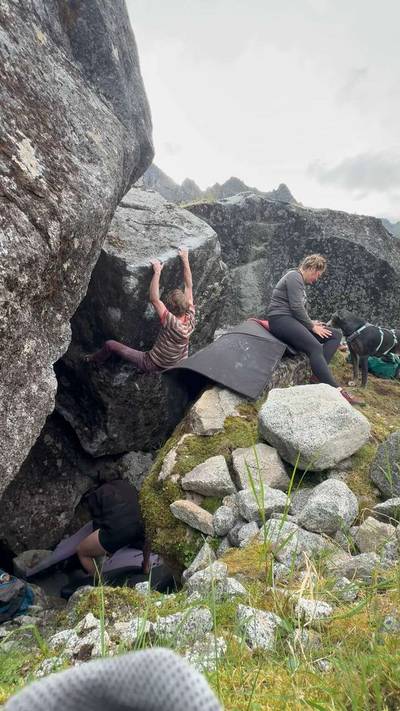
Fairangel Valley, Hatcher Pass
Hatcher Pass Climbing

Last Updated: Sep, 2026
539
Ascents
1,312
Boulders
2
Routes
Guide moderated by Kelsey Gray & David Funatake
ABOUT Hatcher Pass
This digital Hatcher Pass climbing guidebook gives you GPS navigation, verified topos, and beta for hundreds of climbs. Explore classics and hidden gems with offline access to maps, directions, and beta videos. Whether it's your first visit or fiftieth, KAYA makes your Hatcher Pass days smoother, safer, and more dialed.

Hatcher Pass is the heart of the rock climbing scene in Southcentral Alaska, with some of the only granitic rock accessible from the road system. This includes roped climbing, which is quickly growing as new routes are developed. From a bouldering perspective, the potential is endless. Huge talus fields stream down the mountain slopes, occasionally casting rocks into the meadows beyond. At the height of summer, sunlight bakes the Diamond all morning until Toto Buttress shades it in late afternoon. Near sunset the soft light streaming through Fairangel Valley is a truly g... Show more
This digital Hatcher Pass climbing guidebook gives you GPS navigation, verified topos, and beta for hundreds of climbs. Explore classics and hidden gems with offline access to maps, directions, and beta videos. Whether it's your first visit or fiftieth, KAYA makes your Hatcher Pass days smoother, safer, and more dialed.
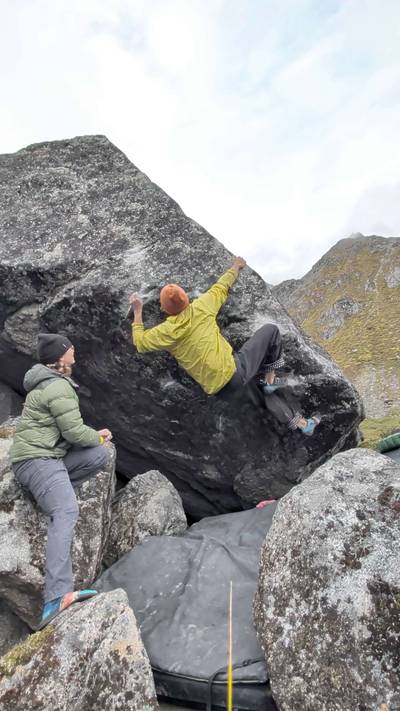
Hatcher Pass is the heart of the rock climbing scene in Southcentral Alaska, with some of the only granitic rock accessible from the road system. This includes roped climbing, which is quickly growing as new routes are developed. From a bouldering perspective, the potential is endless. Huge talus fields stream down the mountain slopes, occasionally casting rocks into the meadows beyond. At the height of summer, sunlight bakes the Diamond all morning until Toto Buttress shades it in late afternoon. Near sunset the soft light streaming through Fairangel Valley is a truly glorious sight. This pocket of granite on the edge of the Talkeetna Mountains, just a short drive from Anchorage, is paradise for those willing to explore. But there are some things you should expect as you adjust to paradise. Coming here for the first time can be confusing and overwhelming. There is so much rock, it takes time to adjust your perspective and learn to navigate through the talus. You should expect to hike, a relatively novel concept for many boulderers, since short approaches here are around 10 minutes.
Approaches through the talus field can be confusing, difficult, and dangerous. Many of these areas are not suitable for small children or dogs. Although some landings are perfect, many of the boulders in the talus have complicated landings requiring more pad coverage than most other climbing destinations. Do not expect to climb the same grade as you do in the gym; it just won’t work until you learn how to climb here.
Hatcher’s sharp crystals reward thick skin and devour baby-soft finger pads, so your first few days will be short but great. It all takes time to adjust, but the work is what makes it so rewarding. If you’re lucky, you will get a great day of climbing on Hatcher granite in the sun. It’s not impossible, we’ve seen it before, even if some years you are more likely to sit under a tarp than let your shoes dry out under the sun. Either way, a trip to Hatcher Pass is worth the work.
WHEN TO COME TO HATCHER PASS:
WINTER: October - March
Winter is a long season in Hatcher Pass. Days are short, dark, and snowy so rather than trying to boulder outside you should do something else: ski, go the gym, train, ice climb (if you must). Not convinced that there are better ways to spend your time? OK. During the winter the Mat-Su Ski Club (MSSC) grooms ski trails at Independence Mine and Archangel Road up to the gate. Few boulders will be climbable or dry, but you can try. Snow machines can also access Archangel Valley from Gold Mint Trailhead, which would make the endeavor of winter bouldering noisier but so much easier.
SPRING: April - May
While snow starts melting at sea level, the boulders in Hatcher usually remain blanketed and difficult to access until Archangel Road opens. However, long days and bright sunshine make it possible to climb if you pick the right problem and have the right gear. Bike or ski up Lower Archangel Road for Aldershade. Marmot Meadows and several boulders in the Lost World and the Diamond can be good in the early season too, although the approaches are longer. Chugach National Avalanche Center maintains a webcam and a snow stake at Hatcher Pass Lodge which is useful for judging the snow levels on Archangel Road.
The Road Run Sector is also a popular early season objective, with its steep, short approach. Also, ski touring up Independence Mine can be a fun way to mix sports and access boulders.
EARLY SUMMER: Late May - Mid June
Warm weather and sunny days mean the itch to go climbing is going to be strong, but the gates at Archangel Road and Independence Mine will likely remain stubbornly closed. A boulderer with an average bike and a strong pair of legs can use this time to extend the start of the season. Lower Archangel is reliable, but Lower Reed Valley and Marmot Meadows can be roasting too. If you can make it further up the road you will likely find lingering snow fields scattered from the Lost World to the Diamond. The Monolith might be okay around this time. Fairangel and Independence Mine are probably not the best places to go.
In the early summer, runoff from the snowpack will make crossing Archangel Creek very difficult until most of the snow has melted. On warm days the creek rises and by the afternoon crossing back to the road can be very difficult.
SUMMER & FALL: Mid June - Early October
Archangel Road reliably opens around the second or third week of June. This date is subjective and based on avalanche debris on the road and the discretion of State park rangers. The long days of June tend to be the driest part of the year and parking at the Diamond can get busy as climbers flock up on weekends.
July and August are when the mosquitos come out, ranging from generally absent to pretty bad, so bring bug spray. The weather is less reliable, potentially rainy, so check the weather stations and the webcams: the Marmot weather station, webcam at the snow stake, the Independence Mine webcam, and DOT webcam pointing towards Archangel Road. Sometimes the best way to check the weather is to go and see for yourself.
The climbing season easily extends into September when the temperature and humidity usually drop. Anything in the shade (Fairangel southern areas) stays damp unless the rock is super clean. No (or less) mosquitos, but bring a puffy jacket, especially if camping. As the termination dust (first snow of the season) starts creeping down the mountain sides you’ll realize the season is almost over. The road typically stays open until the second or third week of October, when snowfall on the road causes the State Park to close the gate.
ETHICS:
Like most other climbers we tend to think of Hatcher Pass, its cliffs, crags and talus, as our special place. This sense of entitlement comes from the time spent in the valley and an intimate connection climbers have with the landscape on which we recreate. However, it is important to remember that we have no ownership nor do we hold any special rights above other user groups in Hatcher Pass. We only own our actions and, to that end, we have a responsibility to minimize our impacts to other climbers and users.
TRASH: Don’t leave any. This includes the boulders, trails, parking areas and campsites. I once climbed with someone who said he could leave his used tape behind because he had cleaned up spill sites somewhere else. I never climbed with him again.
HUMAN WASTE: Plan ahead and make a stop at the gas station on the way or at the outhouse at the parking lot at Gold Mint Trailhead. Remember that the outhouse at the Diamond is not a trash can. If doing your duty while among the boulders (it happens) find a hole in an obscure part of the talus or bury it. No one wants to step in that.
NOISE: Be mindful of other users, hikers, and climbers. They may not want to hear your terrible choice of music.
Pad stashing: In recent years, pad stashing has become more regular in Hatcher due to long approaches and bad landings. We’re not opposed to it, but any stashed pads should be invisible from hikers and other users. From a climbing perspective, no one should have to move your pads to climb a boulder. Remember that in other parts of the country, people take/remove pads that are unattended; while I don’t condone this I am also opposed to visual eyesores.
DEVELOPMENT: Most people probably won’t develop new problems, but if you are compelled to do so, here are some considerations. There are anywhere between 100-300 problems which have not been included in this guidebook. There will likely be 100 more within a year of this guidebook’s release. Don’t assume you did an FA without some serious work. If you barely have to brush something, it is probably not new. So you climbed something first. Big whoop. Did you truly clean it enough that the second person can enjoy the climb? That’s the difference between doing a first ascent and developing a new problem. First ascents are fun, but don’t expect any “thank yous”. I love flat landings, so if I find a perfect patio of rocks under a new climb I would be psyched. Plus it’s a good workout. It should go without saying, but I’ll risk being explicit. Chipping, manufacturing, or creating holds in Hatcher Pass is NOT COOL. There are many boulders with blank faces and that can be a bummer, but leave them that way. There are plenty of climbs to find and clean. Just go look around and explore. A lobotomy is a better use for your chisel.
ACCESS ISSUES: The majority of bouldering in Hatcher Pass does not have access issues and is either on public land or mining land with few difficulties of access. The exception is Independence Mine, where it can range from agressive landowners to tour companies that have tasked themselves with policing the random signes dictating boundaries. It is important to try and respect the boundaries when possible.
HISTORY: When I started climbing in Hatcher Pass around 2009 there was no information available unless you were climbing with Todd Helgeson. Todd had been part of the first round of bouldering development in the pass along with Dan Kryger, Chris Terry, Jeff Claeson, and a few others. From 1996-2008 these guys cleaned a little, climbed a lot, and explored most of the valleys up Archangel Road putting up 700-800 problems. Everywhere we went in Hatcher it felt like Todd knew of established climbs on the best looking rocks. Will and Drew Crowther had made that mistake before, cleaning and naming an excellent problem (Top Gun) only to find out later it was called Humpty Dumpty. Despite the massive number of boulders in Hatcher, my initial impression was that most of the best boulder problems had already been climbed. I could not have been more wrong. By the time the first edition of the Alaska Bouldering Guide was released in 2013, my perspective on the development potential of Hatcher Pass had shifted. I knew the location of most of the established problems in Hatcher and realized I had been walking past potentially excellent problems for years. I made it my mission to redevelop the Diamond, adding density by cleaning the long ignored problems which had escaped the eyes of uber strong climbers. There was a lot of psych in these days, undimmed by the unexpected closure of the eroding bridge over Archangel Creek in 2014, which made the approaches from Reed Lakes Trailhead much longer. The bridge closure opened up new possibilities too, including the development of the Snowbird Talus in Lower Reed, exploration of Sydney Creek Bowl, and a marathon effort to climb Vertical Life in Snowbird Valley. All of Archangel Road was closed for the 2015 season while they repaired the bridge and turned the pot-holed, alder tunnel into a wide-open gravel pad; so we biked the road to get to the Diamond. Climbers were the only ones in Archangel Valley that year.
BUY THE BOOK:
https://www.climbak.com/product-page/hatcher-pass-bouldering-guide
Hatcher Pass is located 50 miles from Anchorage at the edge of the Talkeetna Mountains. From Anchorage, drive north along the Glenn Highway about 36 miles to the exit for Trunk Road. Take Trunk Road north for about 6 miles until it runs into Palmer Fishhook Road. Turn left and follow Palmer Fishhook Road into Hatcher Pass; Archangel Road is about 12 miles from the turnoff of Trunk Road; Palmer Fishhook Rd. ends at Independence Mine about 16 miles up. The drive from Anchorage takes about 1 hour and 10 minutes. From Wasilla or Palmer it’s about 25 minutes.
Archangel Road: Archangel Road covers the majority of this book. The areas of Lower Archangel, Sydney Creek Bowl, Reed Valley, Archangel Valley, Fairangel Valley, and Lane Valley are all found off this one dirt road. The road is blocked by a gate that usually opens sometime in June. It can really depend on snowpack and if the park service forgets about it. The road is still accessible when the gate is closed, but you are required to walk or bike. The first 2 miles are generally good, where most vehicles will have no problems. This changes dramatically when you get to the small bridge over Archangel Creek. From this point on, it gets dicey. If you are driving a low clearance vehicle of any type, you should consider stopping before the bridge. There is a large parking lot for Reed Lakes Trail, although you do have to pay the $5 daily parking fee. This parking area can fill up quickly on a sunny weekend and cars may be parked down the road. This can be a common problem when trying to get by, as people often block large sections of the road with their vehicles. Don’t be a jerk, and pull far off the road. Bring loppers to cut back the alders if necessary, or if you just need to burn some energy.
Once you pass the bridge we don’t take any responsibility for what happens to your oil pan. If you’re worried about your vehicle just hop out and walk, it’s only an extra 15-20 minutes to the end.
Independence Mine: Continuing past Archangel Road on the main paved road, you’ll round the mountain and come to a large parking lot leading up to an old mine. This is a very obvious area with lots of signage, and during the summer should have plenty of tourists around. During the early season it is similar to Archangel Valley as there is a gate blocking the upper parking. This can add a mile of paved road into your approach. Once the gate is open daily, it usually closes much too early. It is important to look for signs for when the gate will close. They usually close it a little early (7pm in recent years) so make sure to be gone before it’s locked. If not, you may end up knocking on doors or spending the night in the parking lot. A $5 fee is required for parking.
OFFLINE MAPS + APPROACH


Get the full experience in the app.
Download KAYA
Recent Beta Videos
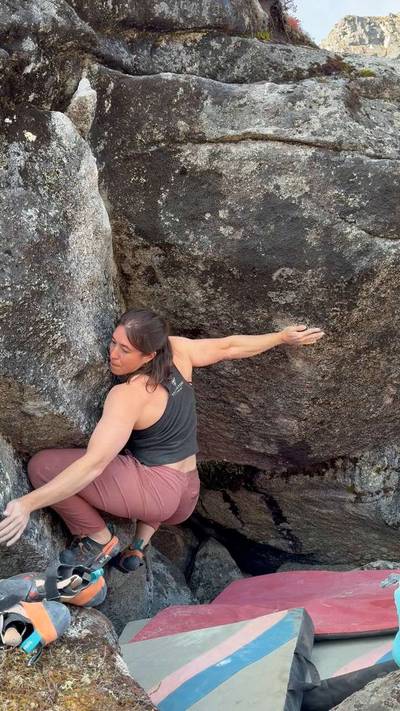
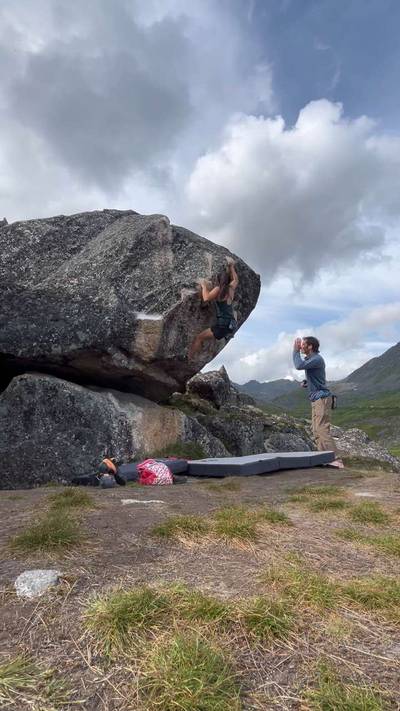
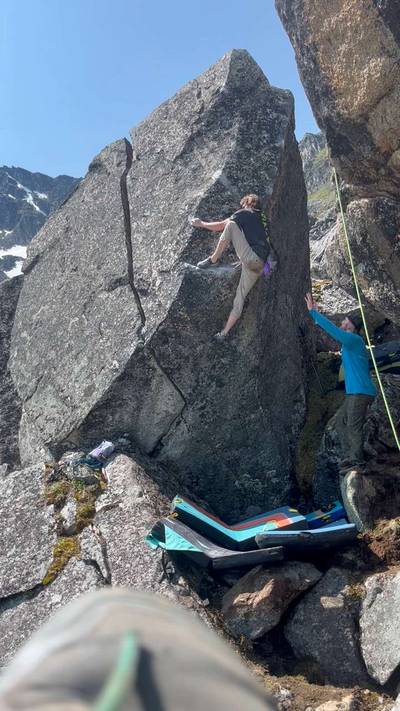
LOAD MORE
Search Hatcher Pass Climbs
Name
Grade
Area
# of Ascents
Rating
Straighten Up and Fly Right
v6
Archangel Valley
14
4.8
(14)
Solid
The Ancient One
v2
Reed Valley
10
4.9
(10)
Solid
Muffin Man
v8
Archangel Valley
9
3.8
(9)
Solid
Seasons in the Mist
v5
Archangel Valley
8
4.8
(8)
Solid
Albatrocity
v7
Archangel Valley
8
3.8
(8)
Solid
Psycho Ex
v7
Fairangel Valley
7
4.2
(7)
Solid
Steadfast
v10
Lane Valley
6
3.6
(6)
Solid
Heartbreaker
v9
Archangel Valley
6
4.4
(6)
Solid
Nightshade
v7
Fairangel Valley
6
4.5
(6)
Solid
Chris's Lament
v7
Lane Valley
5
4.0
(5)
Solid
EBM II
v8
Archangel Valley
5
4.0
(5)
Solid
Euphoria
v3
Archangel Valley
5
3.3
(5)
Solid
Dancing Queen
v8
Lower Archangel Road
5
3.8
(5)
Solid
David's Cave
v6
Archangel Valley
4
4.0
(4)
Solid
P.F.D.
v10
Fairangel Valley
4
3.8
(4)
Solid
Captain Jack
v4
Archangel Valley
4
4.0
(4)
Solid
Clan of the Cave Trolls
v10
Fairangel Valley
4
4.0
(4)
Solid
Honky Tonk Badonkadonk
v10
Archangel Valley
4
3.5
(4)
Solid
Tank Girl
v2
Fairangel Valley
4
4.7
(4)
Solid
Showing results: 1 - 19
Recent Ascents in Hatcher Pass
KAYA CLIMBER
CLIMB
DETAILS
DATE
ANDI SCHWEERS
@theschweers
Top was pretty dirty - should always have a wire brush!!
★ 3(v3, Solid)
9.13.2026
KYLEE SAM
@Kylee.Sam
Also rp’d “Lady of the Lake V2” on Walken Boulder; name is repeat of Gold Chord v2 [Britta]
(v1, Solid)
8.23.2026
Showing results: 1 - 5
WEATHER
SEASON CHART
APPROACH
Forecast for Hatcher Pass

Areas in Hatcher Pass
Explore Hatcher Pass from all levels with KAYA PRO. Drill down to the area, subarea, boulder and climb levels. Get approach information for each, and a variety of beta.
Download KAYA