
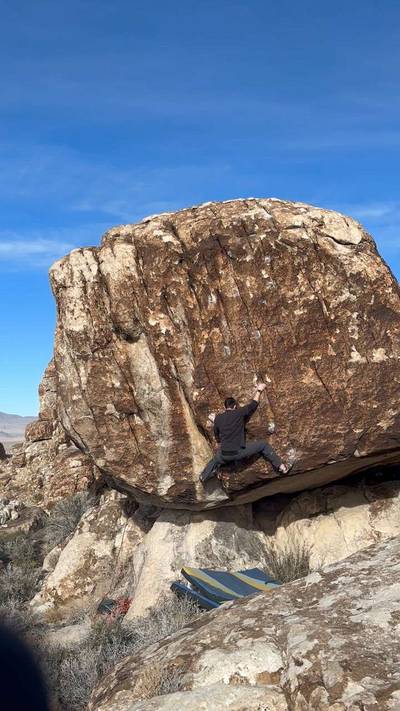
Topus Mountain, Ibex
Ibex Climbing

Last Updated: Sep, 2026
458
Ascents
950
Boulders
9
Routes
Guide moderated by Aaron Child
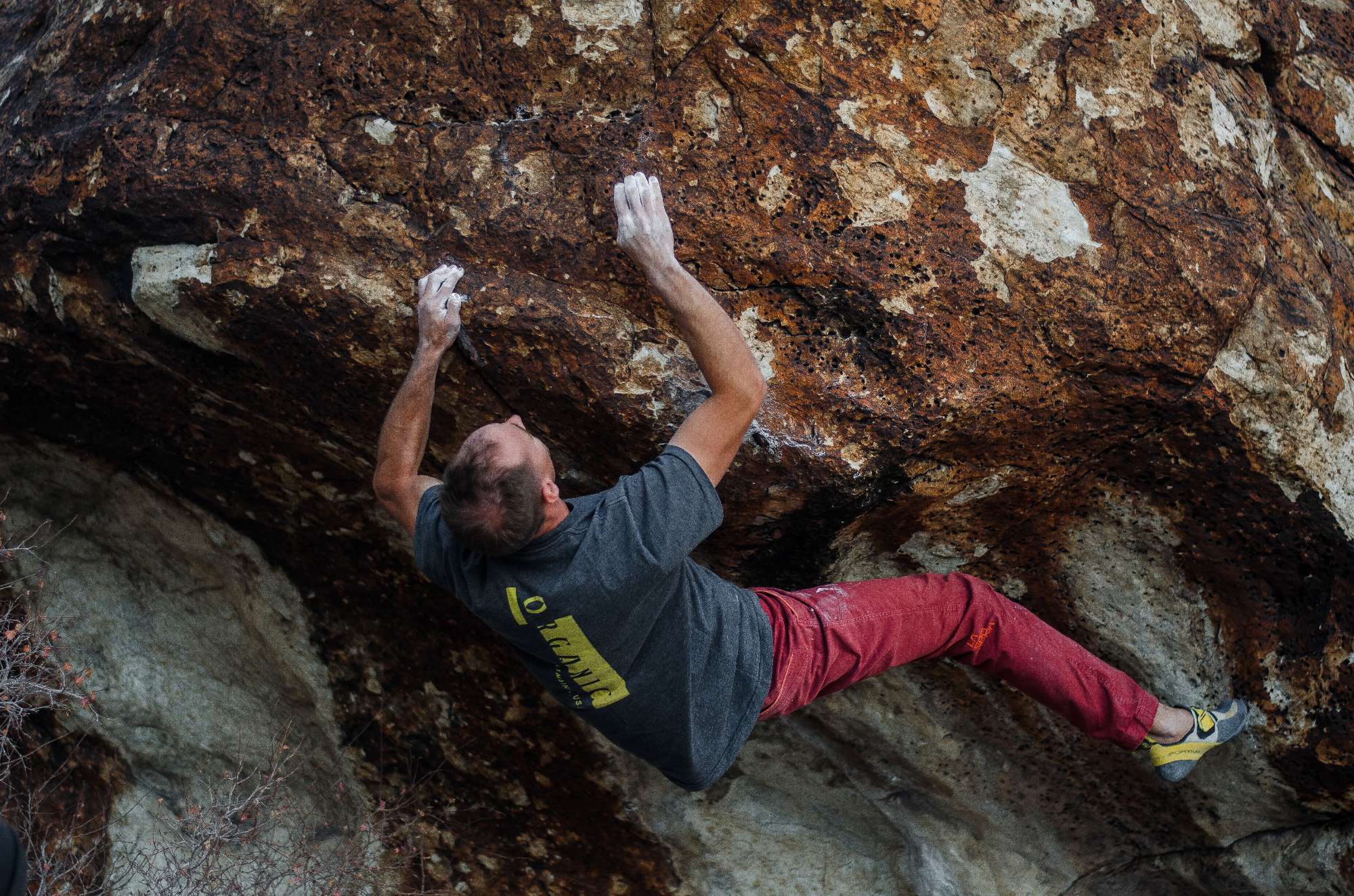
ABOUT Ibex
This digital Ibex climbing guidebook gives you GPS navigation, verified topos, and beta for hundreds of climbs. Explore classics and hidden gems with offline access to maps, directions, and beta videos. Whether it's your first visit or fiftieth, KAYA makes your Ibex days smoother, safer, and more dialed.

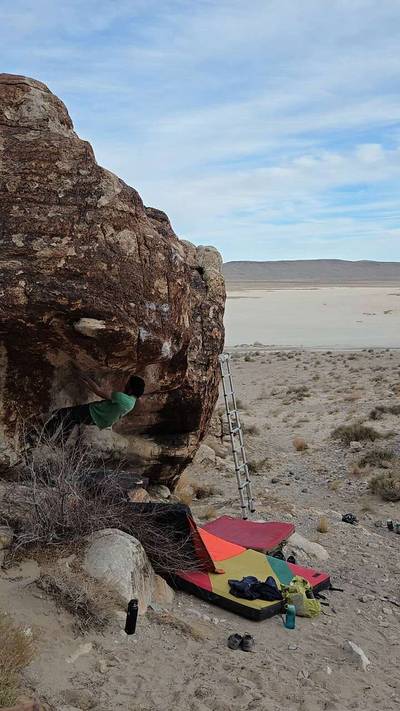
Ibex is a remote climbing area in Utah’s west desert that hosts some of the best rock in the entire state, but climbers must venture into remote territory in order to experience it. The massive quartzite blocks that house world class boulder problems surrounded by soaring peaks in the Great Basin desert environment provide a unique wilderness climbing experience. This is truly a special place, and we must treat the land accordingly.

— SEASON —

Bouldering season usually starts in late fall and can last until mid spring (November through April). The temps you’re looking for are between... Show more
This digital Ibex climbing guidebook gives you GPS navigation, verified topos, and beta for hundreds of climbs. Explore classics and hidden gems with offline access to maps, directions, and beta videos. Whether it's your first visit or fiftieth, KAYA makes your Ibex days smoother, safer, and more dialed.
Ibex is a remote climbing area in Utah’s west desert that hosts some of the best rock in the entire state, but climbers must venture into remote territory in order to experience it. The massive quartzite blocks that house world class boulder problems surrounded by soaring peaks in the Great Basin desert environment provide a unique wilderness climbing experience. This is truly a special place, and we must treat the land accordingly.
— SEASON —
Bouldering season usually starts in late fall and can last until mid spring (November through April). The temps you’re looking for are between 32-65 degrees Fahrenheit as a high. If it’s cold, you’ll really need it to be sunny. The warmer it gets, the more you’ll need a breeze. The colder it is, that breeze will freeze your fingers off and crush your soul. And this is Ibex - some kind of breeze is usually present. Sunny winter climbing can be idyllic or miserable depending on wind speed and cloud coverage. Check the forecast, especially the fine details.
—WILDERNESS REMINDER —
This is a remote area included in, and bordering, King Top and Wah Wah Wilderness Study Areas. That means that cell service is extremely spotty, if not nonexistent, and help is far away. You will need to be self sufficient when coming out here. Bring all of the extra food, water, gas, and spare tires that you’ll need. I recommend filling up on gas whenever possible, preferably in Delta, UT or Baker, NV, and keep an eye on how much gas you’re using when driving around. It’s 45 minutes to Delta, and a tow costs around $500, but only if you can get service. Be confident that you can get yourself out if you take a bad fall. The boulders out here are tall.
The roads out here are all dirt, and can be deceivingly rocky. Tires can be punctured by the sharp limestone rocks. Bring a spare, and know how to change a flat on an uneven surface. Or, better yet, get some good, knobby tires (KO2's, Wildpeak A/T4's, etc.). Road tires are risking it!
Leave no trace. Don’t be messy, reckless, or loud. Clean up after yourselves - that includes climbing tape! It may feel like you can do whatever you want out here, but that is not the case. More on that below.
—ETHICS—
CRYPTO ALERT:
At first glance, Ibex can be viewed as a wasteland. Look a little closer, and you’ll see that it is quite the opposite. Many plants and animals make their lives here, and as such, its fragility can’t be overstated. Like the desert of the Colorado plateau, the Great Basin desert’s good health relies on cryptobiotic soil crust (crypto for short). Created and composed of living organisms like cyanobacteria and algae along with inorganic soil matter, this crust is a living organism that is able to photosynthesize, fixes nitrogen in the soil, retains moisture, prevents erosion, and is therefore vital for plants and animals to thrive in this harsh environment. Unlike the Colorado plateau, though, this crypto does not grow to be inches thick. It’s very subtle, growing between the limestone rocks at your feet when hiking around. It’s usually thicker in shady washes, but outside of the Red Monster area, it’s literally everywhere, so please watch your step. It can be avoided by being mindful, and all trails to bouldering areas do avoid it. But please, again, watch your step and minimize your impact on this fragile desert environment. It’s worth it.
PLANTS:
Don’t destroy or cut down any plants. They didn’t do anything to you. They’re just trying to survive, man.
ANIMALS:
There are many animals that call this area home, including wild cats, eagles, owls, rabbits, rodents, and reptiles. Don’t disturb any of these guys if you see them. If you happen to see a Great Basin rattlesnake who is pissed off and rattling, leave the area and climb somewhere else. This stresses them out immensely, and could put their survival at stake.
CARS:
Drive on existing roads and pullouts so you don’t kill plants and crypto. Don’t do donuts on the hardpan/dry lake bed. I know it’s super sick, but you can always do that in your mom’s driveway when it snows. Let’s be better than the hooligans that come out here.
FIRES:
Refrain from making fires. I know, I know, fires are an essential part of camping, but when campfires get misplaced they can explode entire boulder problems, like what happened with Ju. Let’s not give others the idea that if they can make fires, they can make them anywhere. Don’t gather firewood from nearby pinyon or juniper trees. The desert needs the dead, decaying wood to replenish nutrients in the soil, even though it takes forever to break down. All a part of the cycle. Also, this part of the state has some of the darkest skies and most vibrant stars. Why not spend the night looking at the Milky Way and pondering the universe?
WET ROCK:
Due to the quartzite’s outstanding harness, climbing after it rains is usually not an issue.
BRUSHES:
Don’t use wire brushes. Even though the quartzite is bomber, wire brushes will damage it. Softies only.
ROCK ART:
Pictographs can be found on many boulders around Ibex. The boulders that do are noted in this guide. Do not destroy or damage these. Look, don’t touch, just like you’re in a museum. Don’t climb on the faces that have these on them, either. Just go climb on another face. I guarantee you there’s another banger around the corner.
— CAMPING —
This land is managed by the BLM, and you can pretty much camp anywhere, but please try and camp in established, cleared areas. There are nice spots along the base of the Ibex Crags. However, please refrain from camping directly under the boulders at the Red Monster Area.
— HISTORY AND OTHER COOL NERDY THINGS —
The Ibex Crags are an unmistakable geologic feature when seen from the east; massive white quartzite cliffs soar up grandly from the valley floor. This quartzite is actually the purest quartzite in the world - more than 99% quartz! It was deposited in a near-shore environment either in shallow sea water, and/or as dunes on the beach around 450 million years ago. The quartzite is sandwiched by dolomite and limestone above and below, denoting fluctuating sea levels. It’s really cool to envision this area being a tropical, beach environment, and at one time being at the bottom of the ocean. Fossils can be found everywhere in the limestone and dolomite. In fact, the Upper Pogonip Group layer is one of the most significant layers from the Ordovician that holds an abundance of fossils.
The geology of the Great Basin’s ‘basin and range’ topography is extremely complex and fascinating. The hot, underlying mantle is doming upwards, causing the crust to be thinned and stretched apart. As a result, the crust is collapsing under its own weight, creating valleys as the mountains are rising.
The Desert Archaic people occupied this area dating back to 10,000 BC. Both the land and climate were drastically different than today. Glaciers high in the mountains fed into the massive Lake Bonneville, which in turn, sustained incredible amounts of life: giant sloths, vultures with 18 foot wingspans, sabertooth tigers, bears, etc. Their skeletons can be found in caves scattered across the Great Basin. You can also find pictographs, arrowheads, pottery, remnants of fires, and knappings all over this area that date back to that age. Within the last 2,000 years, the Goshute, Paiute, and Shoshone people learned to thrive as the land dried out.
In the early 20th century, a brave young sheep herder named Jack Watson came out here to built a homestead. Life was rough, and he eventually left after years of struggle. Bouldering development started in the 90’s, first by the legendary John Sherman, and then by the usual SLC suspects: Boone Speed, Mike Call, Jonathan Knight, Ian Glas, Brian Mecham, Matt Lund, Mike West, Jeff Baldwin, John Cronin. You’ll recognize those names in LCC’s development. Ok, enough nerdy stuff - go climbing.
FROM THE NORTH: Take I-15 south to exit 228. Take a right off the exit, drive through Nephi, and turn right on 100 N towards Delta (fill up gas here!). Once at Delta, make a right onto Highway 6/US-50. Drive 50.1 miles and make a left onto the main dirt road that accesses all of Ibex.
FROM THE SOUTH: Take I-15 north to exit 62 for UT-130 towards Enoch/Minersville/Cedar City. Once you hit Minersville, take a left onto UT-21 that leads to Milford. Once you hit Milford, the highway turns into UT-257. Follow this until you hit Highway 6/US-50 at Hinckley, UT and turn left. Follow this for 44.6 miles and make a left onto the main dirt road that accesses all of Ibex. (Alternatively, you could hop onto Iron Mine Pass Road by taking a left onto center street at Milford, then a right onto Iron Mine Pass Road, take a left onto Crystal Peak Rd, then a right onto Tule Valley Rd)
FROM THE WEST: Find your way to Highway 6/US-50, the loneliest highway in America. The main dirt road into Ibex is 103 miles from Ely, NV.
FROM THE EAST: Take I-70 to Salina, UT. Hop on Highway 6/US-50 until you reach Scipio. Take I-15 south and get off on exit 178 for Delta/Holden. Follow this to Delta (fill up gas here!), then drive 50.1 miles and make a left onto the mai dirt road that accesses all of Ibex.
OFFLINE MAPS + APPROACH


Get the full experience in the app.
Download KAYA
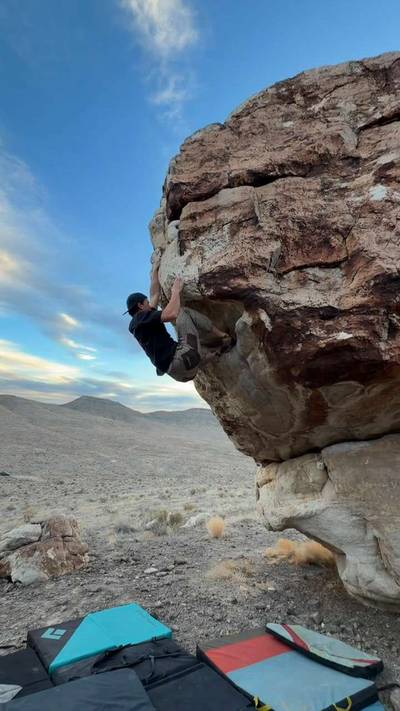
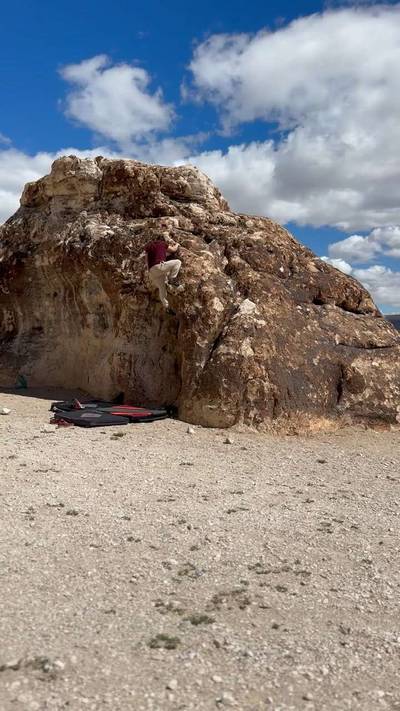
Recent Beta Videos
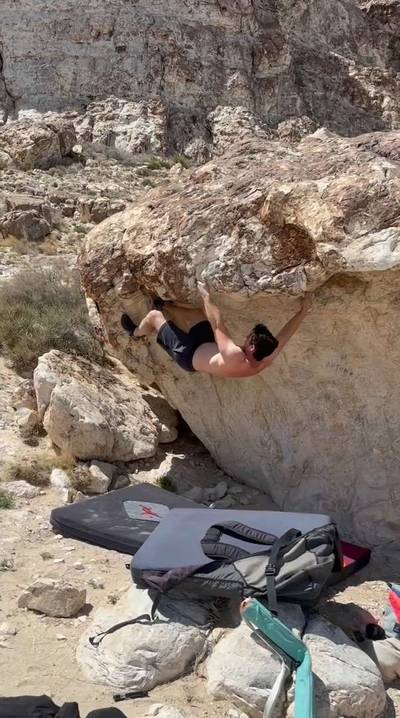
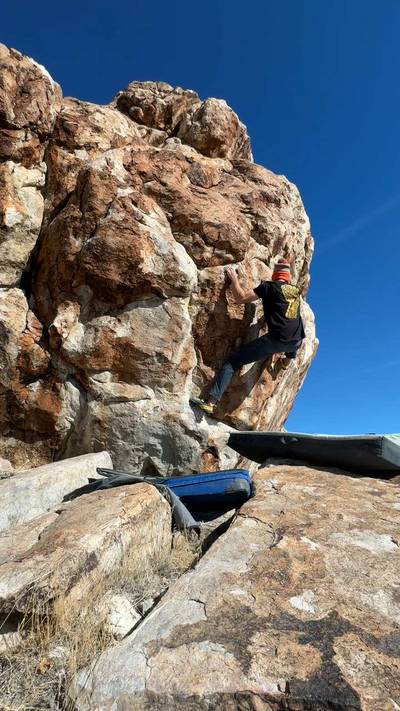
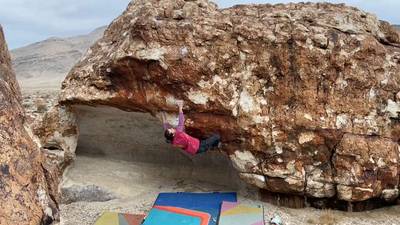
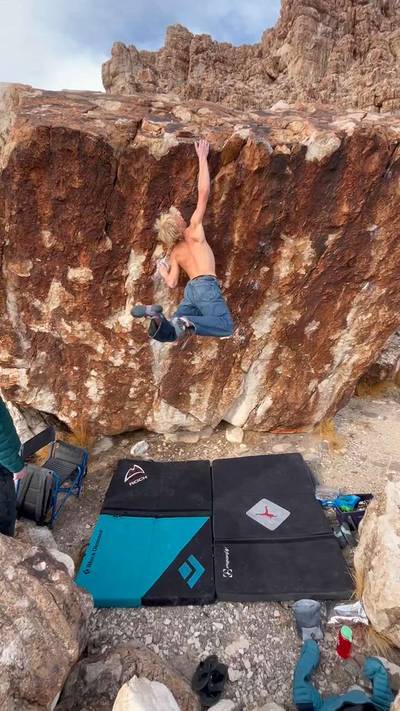
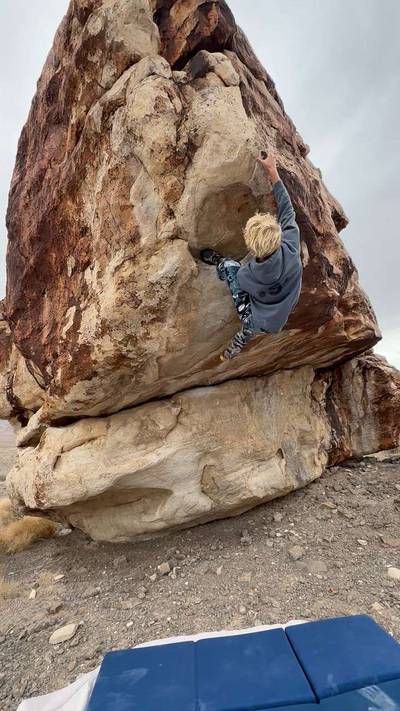
LOAD MORE
Search Ibex Climbs
Name
Grade
Area
# of Ascents
Rating
S
v0
Crystal Peak
54
0.0
(54)
Solid
White Arete
v7
Ibex Crags
20
4.7
(20)
Solid
The Topus
v5
Topus Mountain
15
4.5
(15)
Solid
Bruce Lee
v10
Ibex Crags
15
4.2
(15)
Solid
Bone Collector
v11
Ibex Crags
14
4.4
(14)
Solid
Wing Chun
v12
Ibex Crags
11
4.9
(11)
Solid
One Eyed Man
v8
Sundev's Area
10
4.9
(10)
Solid
The Pan Galactic Gargle Blaster
v10
Sundev's Area
9
5.0
(9)
Solid
White Arete Sit
v9
Ibex Crags
9
4.4
(9)
Solid
Blue Flowers
v7
Ibex Crags
9
4.3
(9)
Solid
Ju
v7
Ibex Crags
9
4.4
(9)
Solid
Sunspots
v6
Sundev's Area
6
3.8
(6)
Solid
Coppertone
v11
Sundev's Area
5
4.3
(5)
Solid
Tranced Out and Dreamin'
v6
Ibex Crags
5
4.6
(5)
Solid
Thing One
v7
Ibex Crags
4
3.5
(4)
Solid
Bigger is Better
v6
Ibex Crags
4
4.3
(4)
Solid
Meat and Potatoes
v8
Ibex Crags
4
5.0
(4)
Solid
Kangaroo Meat
v7
Topus Mountain
4
3.7
(4)
Solid
The Middle Finger
v8
Black Hills
3
5.0
(3)
Solid
Showing results: 1 - 19
Recent Ascents in Ibex
KAYA CLIMBER
CLIMB
DETAILS
DATE
Showing results: 1 - 5
WEATHER
SEASON CHART
APPROACH
Forecast for Ibex

Areas in Ibex
Explore Ibex from all levels with KAYA PRO. Drill down to the area, subarea, boulder and climb levels. Get approach information for each, and a variety of beta.
Download KAYA
