Red Feather Lakes Climbing

Last Updated: Aug, 2026
121
Ascents
553
Boulders
226
Routes
Guide moderated by Ben Scott
ABOUT Red Feather Lakes

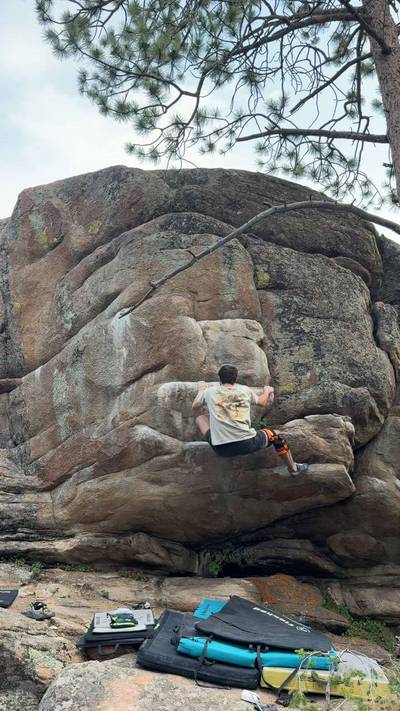
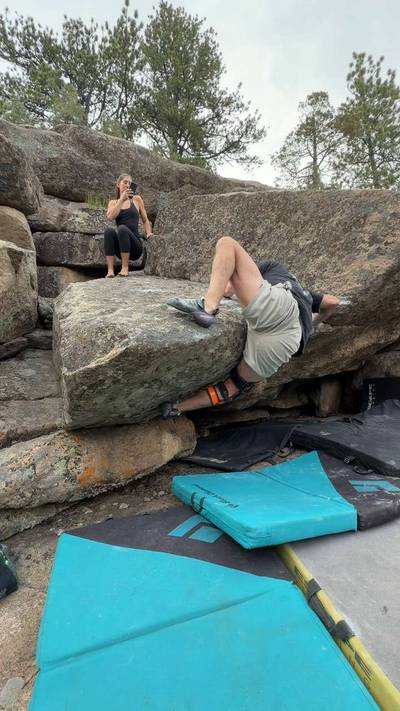
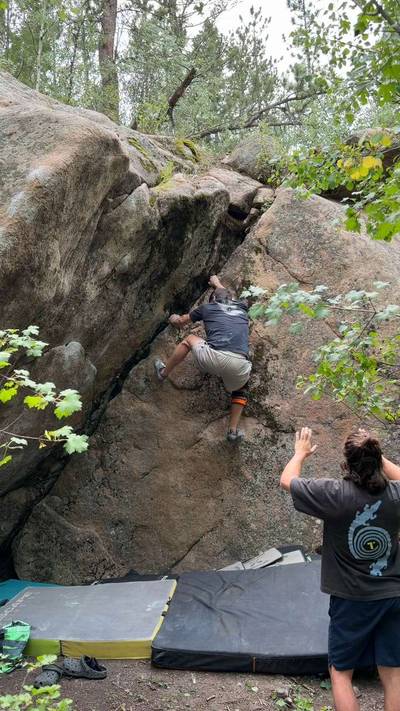
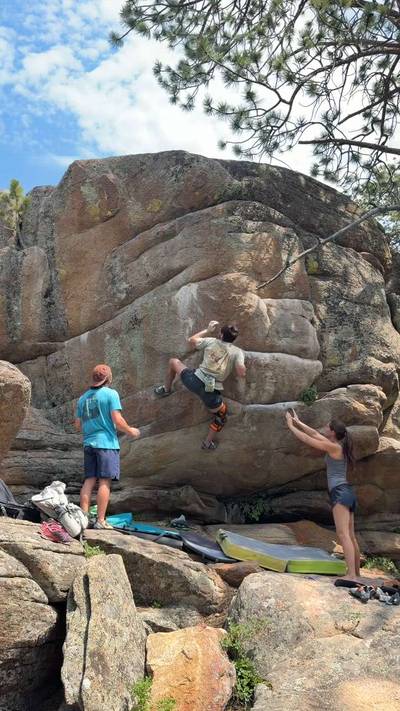
This digital Red Feather Lakes climbing guidebook gives you GPS navigation, verified topos, and beta for hundreds of climbs. Explore classics and hidden gems with offline access to maps, directions, and beta videos. Whether it's your first visit or fiftieth, KAYA makes your Red Feather Lakes days smoother, safer, and more dialed.

Get the paper guide at: https://www.fixedpin.com/products/red-feather-lakes-climbing-guide or your local climbing shop.

OVERVIEW
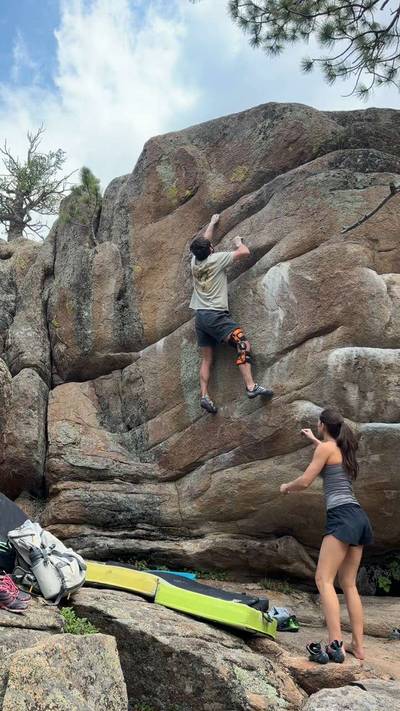
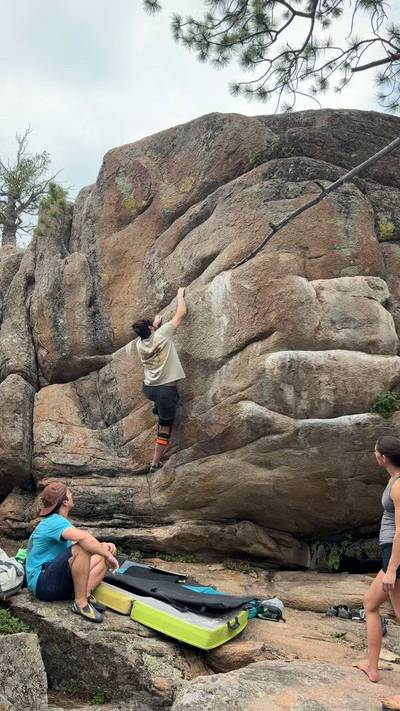
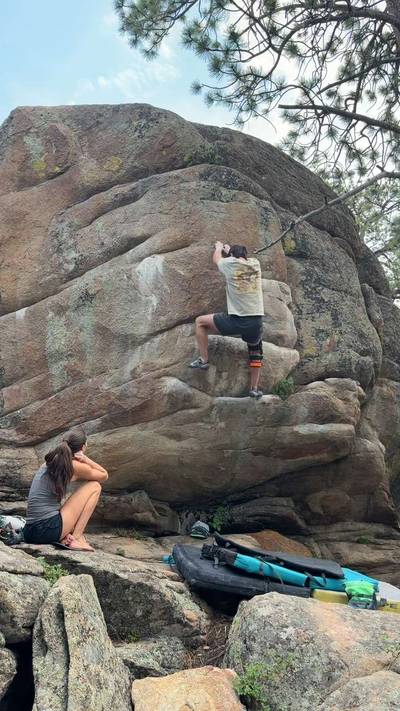
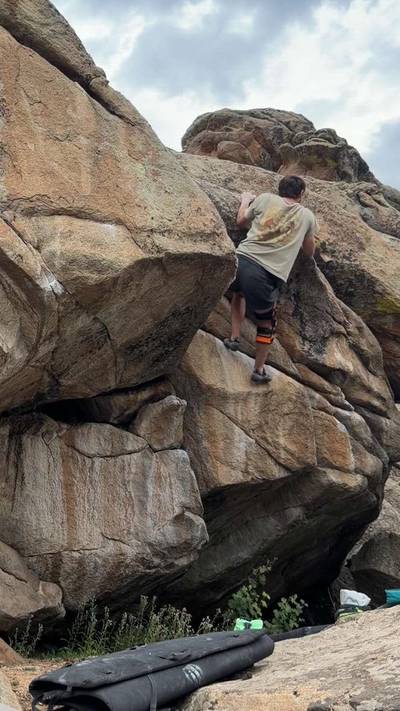
The climbing in Red Feather Lakes is scattered around an area of nearly 90 square miles in Northern Colorado. From the Poudre Canyon in the south all the way north to the Cherokee Park Rd (CR 80C), Red Feather is a massive landscape of granite domes, boulders and cliffs. The area has been a place for fisherman, backpackers and mountain bikers. Only now is the story being told about all the climbing here. Most of the land lies on Arap... Show more
This digital Red Feather Lakes climbing guidebook gives you GPS navigation, verified topos, and beta for hundreds of climbs. Explore classics and hidden gems with offline access to maps, directions, and beta videos. Whether it's your first visit or fiftieth, KAYA makes your Red Feather Lakes days smoother, safer, and more dialed. Get the paper guide at: https://www.fixedpin.com/products/red-feather-lakes-climbing-guide or your local climbing shop. OVERVIEW The climbing in Red Feather Lakes is scattered around an area of nearly 90 square miles in Northern Colorado. From the Poudre Canyon in the south all the way north to the Cherokee Park Rd (CR 80C), Red Feather is a massive landscape of granite domes, boulders and cliffs. The area has been a place for fisherman, backpackers and mountain bikers. Only now is the story being told about all the climbing here. Most of the land lies on Arapahoe & Roosevelt National Forest (Canyon Lakes Ranger District) but there are also State Wildlife Land (DOW) areas and a lot of private property as well. The following information is just about everything you need to know to climb in glorious Red Feather Lakes. ETHICS Red Feather Lakes is only about 50% developed as a climbing area. Hundreds of routes and boulder problems remain unclimbed, and every crag in this book still holds untapped potential. Beyond these, there are countless sectors not even included here, making the overall quantity mind-blowing. One of the most exciting aspects of Red Feather is the unknown—you can wander into the forest and find new climbs of every style. It’s a place for creativity and exploration that could keep climbers busy for decades. - Boulder Development - Brushes: Wire brushes and hand brooms are essential; use plastic or toothbrush-style brushes for delicate cleaning. Vegetation: It’s fine to prune small bushes or deadfall, but avoid cutting living trees. Lichen: Some is very tough—try “rock rubbing” if brushes fail. Trails & Cairns: Keep trails minimal. Avoid excessive cairns—they’re unnecessary and an eyesore. Loose Rock: Be cautious with prybars or screwdrivers—using tools scars the rock and damages reputation. When in doubt, climb it first or consult the NCCC (nococlimbing.org) before removal. - Documentation - To keep track of new development, submit new problems and routes on KAYA with as much information as you can include. - Campfires & Wildfires - The Cameron Peak Fire (2020) burned over 208,000 acres, though only a small part of Red Feather was affected.Red Feather has been lucky so far thanks to fire mitigation by the Forest Service and locals. Key takeaway: Do not start campfires. Even in campgrounds or snow, the risk of wildfire in Colorado’s dry climate outweighs the reward. - Waste Disposal - Carry a trowel for cat-holes or use Wag Bags to pack waste out. Stay at least 100 yards away from water sources and parking areas. Public bathrooms are available in Red Feather Lakes—use them when possible. - Dogs & Pets - Dogs are welcome on Forest Service land. On DOW land, they must be under voice control. If your dog chases wildlife or horses, keep them leashed or tied up. Red Feather is great for dogs—bring them, but keep it responsible. HISTORY The climbing history of Red Feather Lakes is fragmented and partially lost to time. Climbers have been active here for over 50 years, but much of the early activity went undocumented. 1970s–1980s: The first documented climbing took place in the mid-1970s at the Ben Delatour Boy Scout Ranch (BDSR), where Andy Hibl and Bill Nelson started a mountaineering program. Hibl placed massive 10–12"" eye bolts to protect scout top-ropes—likely the first fixed hardware in Red Feather. Through the mid-80s, climbers such as Mark Guzman, Bill Alexander, Mike Lawson, Pat McInearney, and others established the first technical lines around BDSR and nearby Swallow Crags. By the late 80s, climbers like Craig Luebben, Rob Kelman, Malcolm Daly, Bryan Parsons, and Jim Brink were developing Creedmore Crag, after Brink stumbled upon it during a fishing trip. Brink later wrote the first mini-guide to the area. 1990s: Development continued but documentation is hazy. Craig Luebben was likely still active, but much history was lost after his passing. Andrew Mason and Matt Fanning developed routes at the Dowdy Domes into the early 2000s. The late 90s marked a new Golden Era of bouldering, led by Geoff Sluyter, Pat Goodman, Francis Sanzaro, Mike Auldridge, and others. Areas such as the Ceremonies and numerous zones west toward Disappointment Falls were explored. 2000–2010: The early 2000s saw a surge of development at areas like the Ceremonies, Meadow Boulders, Lady Moon, Parvin Lake, and the Capitols. Key players included Jeremy Bisher, Dave Ludders, Chuck Fryberger, Jamie Emerson, Tom Blackford, Ryan Anglemeyer, Doug McKee, Jason Tarry, and the author. From 2006–2010, drought years brought mild winters, enabling locals to establish hundreds of boulder problems. Areas such as the Swoosh, East Dowdy Lake, Pit and the Pā, West Elkhorn Creek, and the Iron Fist Zone were developed. Climbers like Cam Cross, Collin Kopitzke, Jason Nadeau, Jamie Emerson, Jacob Ojile, Jason Tarry, and Ryan Nelson were central to this effort. 2010–Present: Development has continued with both longtime locals and new climbers. Rope climbing has expanded at the Grazing Allotment, Swallow Crags, Pot of Gold Wall, Dowdy Domes, and new areas like Dome with a View. Contributors include Jeff Snyder, Josh Cook, Tucker Schultz, Ryan Nelson, Jason Tarry, Ken Duncan, and the author. Bouldering has also thrived, with active climbers such as Ryan Nelson, Matt Robbin, Matt Poiesz, Brett Hoffman, Nick Perl, Ben Jurenka, Isaac Trujillo, Pete Zagorski, Drew Zweifel, and John Lombardi. The pace of development has only increased in recent years and shows no signs of slowing. GEOLOGY Granite is the main rock of the outcrops in Cherokee Park and Red Feather Lakes. Fine-grained rock cooled quickly. Larger-grained rock cooled slowly, so crystals had time to form. One mineral in granite is feldspar, usually pink or white. Greyrock Mountain is a part of the granitic Log Cabin Batholith. It intruded surrounding older rock 1.4 billion years ago. The granite intrudes into other layers. As the layers erode, the load lightens and the granite cracks. Weathering is done by chemicals, water, wind and ice which enter the cracks. Weathering happens fastest at edges. Slabs of rock peel off like an onion skin in a process called exfoliation. How do the "patina holds" in Red Feather naturally form? Patina is a term often used in reference to metals. In a general sense it is an altered layer on the outer surface of the material. This alteration is usually chemical in metals. In reference to granite, patina is an erosion feature... mostly. In eons past the erosion setting of a particular boulder or cliff may have been much different from today. Different settings may have polished the outer layer with water; water can also deposit their own thin patina layers on top or surrounding this polish. As centuries pass, the climate and erosion setting of that area may change to wind and freeze-thaw cycles rather than a water-dominant setting. These changes will cause the outer layer to slowly disappear, but not all at once. The plates we see are then created by wind, water, and other erosion processes attacking the stone and breaking down the more friable areas leaving the patina (outer layer) sticking out for climbers to enjoy. –written and compiled by Collin Kopitzke PRIVATE PROPERTY Red Feather Lakes is a huge residential area with hundreds and hundreds of private homes scattered around it. Along with those homes comes a lot of private property. Luckily, almost all of the climbing described in this guide is on public land. But there are also a lot of problems listed that are located on private property and are included for historical purposes only. DISCLAIMER: The author and his cohorts are obviously complete and total hypocrites when it comes to climbing on private land. During the last 24 years of bouldering development there were hardly any climbers to speak of, and the area has changed a lot over that time span. Boulders that were once public have become private, old landowners who were ok with climber activity have sold the property to less tolerant folks, etc. Basically, the risk of getting caught trespassing used to be very, very low. MOVING FORWARD: Please do not trespass for climbing. The non-climbing community in Red Feather Lakes has really no idea that climbing is even a thing. This book is most likely going to bring a lot more traffic to the area than these folks have seen ever before. We as a community need to give ourselves a good reputation right off the bat. Lead by example—DO NOT TRESPASS ON PRIVATE LAND WITHOUT THE LANDOWNER'S PERMISSION! See individual Areas, Subareas, and Boulders for driving and approach info. Happy climbing.

OFFLINE MAPS + APPROACH

Get the full experience in the app.
Download KAYA

Recent Ascents in Red Feather Lakes

KAYA CLIMBER
CLIMB
DETAILS
DATE
JOHN K YOUNG
@slapthesloper
Tip-Top v2
Big moves to bigger jugs
★ 4(v2, Solid)
8.9.2026
JOHN K YOUNG
@slapthesloper
First-Class v3
Tried to not use any of the good left feet and just step on the start crimp for the big deadpoint first go and my foot got stuck and took a weird fall so just used the closest small left edge, still the crux move
★ 3(v3, Solid)
8.9.2026
JOHN K YOUNG
@slapthesloper
Top-Notch v4
Favorite line in red feather, skip the foot jug for full value
★ 5(v4, Solid)
8.9.2026
JOHN K YOUNG
@slapthesloper
Sterling v5
Unfortunate the crux move only exists because you eliminate the good right hand but still a cool harder full left to right line that’s worth doing
★ 4(v5, Solid)
8.9.2026
JOHN K YOUNG
@slapthesloper
T-Hop v5
Right leg is cooked so I skipped the direct topout and bailed to the ramp, this definitely goes as a one mover from the jug to the apex but seems more V7ish than V5 id think, wish i could’ve tried it that way
★ 3(v5, Solid)
8.9.2026
WEATHER
SEASON CHART
APPROACH
Forecast for Red Feather Lakes
Powered by the Tomorrow.io Weather API

Areas in Red Feather Lakes

Explore Red Feather Lakes from all levels with KAYA PRO. Drill down to the area, subarea, boulder and climb levels. Get approach information for each, and a variety of beta.
Download KAYA